
Table of Contents
Top Reasons to Consider Supported Independent Living
Know about Supported Independent Living
What is Supported Independent Living?
When you get paid personal support, it’s called Supported Independent Living (SIL).
You will get:-
- Personal Care
- Cooking Meals
- Learning new skills
- Making a routine
- Following social skills
- Taking medications
- Indulging in community access activities
When can you use the Supported Independent Living services?
- If you are one of those needing higher support, then SIL is undoubtedly the best choice for you.
- If you need help all day, that is 7 days a week.
- Even if you need some overnight support.
Supported Independent Living (SIL) and Shared Housing
Getting Supported Independent Living (SIL) services in different forms
- Home Modifications
- Assistive Technology
- Individualised Living Options
- Other home and living supports
- Other home and living supports
When can NDIS fund SIL?
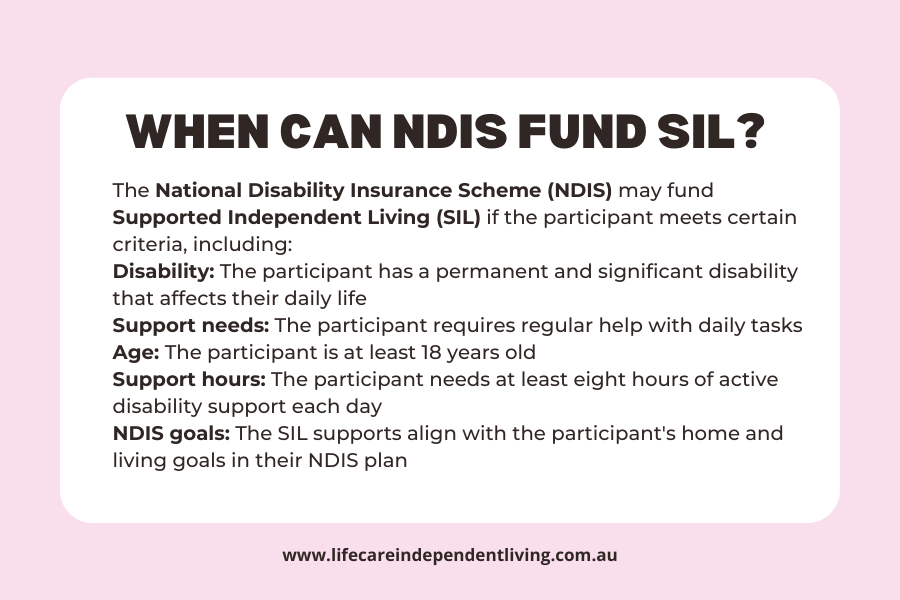
- NDIS Funding Criteria: If reasonable, your NDIS Plan can have NDIS SIL services. It looks into factors like whether your disability or early intervention requirements fulfil the NDIS funding criteria of impairments. It will seek how it can help you achieve your goals under the NDIS Plan. This looks into the activities you can perform with the help of SIL. NDIS will also consider the funding support for community participation.
- Your age matters for NDIS SIL: If you’re 18 years or above, then you can certainly get funds for SIL. You can look into the services to attain home and living goals.
- Dependency on the support need: You must determine how much SIL is required. If you need both:
- Active disability support for more than 8 hours per day to complete daily activities
- We offer support at other hours, whether you need it 24 hours a day, 7 days a week, or even overnight.
Now, let us look into some of the activities offered by SIL.
Supported Independent Living with Social and Community Participation
SIL can give you opportunities to participate in social and community activities.
- Social and Recreation Supports: SIL helps you enjoy social and recreational activities. You can do it with community, friends, and family support.
- Work and study Supports: NDIS SIL provides support for many programs related to work and study.
Supported Independent Living and Equipment and Technology
SIL provides equipment and technology in the following formats:-
- Assistive Technology: You can use the help of the equipment and technology to carry out the activities. Your disability-related challenges improve. You can use these items more efficiently or safely.
- Assistance animals, including dog guides: It help you with activities that are a problem for you. An accredited assistance animal provider trains NDIS Assistance Animals, which assist you in different ways.
- Vehicle Modifications and Driving Support: NDIS Vehicle Modifications help you change your vehicles. You gain independence to carry out activities irrespective of your disability.
If you wish to learn more about any of these activities, you can contact your LAC/GP or even the NDIS helpline directly.
Supported Independent Living and Disability Health Supports
If you are unable to handle your normal health conditions because of your disability, then you can take disability-related health support. You might need it in the following scenarios:
- If your disability causes any of the health conditions mentioned in the operation
- If you require help to manage one of the health conditions as per the operational guidelines
The guideline mentions a list of these health conditions. To learn more, speak with your NDIS contact, support coordinator, or recovery coach.
Supported Independent Living and Continence Supports
If your disability hampers you to manage your incontinence such as pads or bed protectors. SIL helps with incontinence support. You can get help for incontinence if you can’t control your bowel or bladder movements. A child with a disability is more likely to get funds for NDIS continence support. Your NDIS Coordinator can help you to proceed. They will look into whether you need SIL and its continence support.
Supported Independent Living and Diabetes Management Supports
NDIS Funds chronic health conditions or illnesses only if they relate to your disability. So, in case you are not being able to manage your diabetes due to your disability, you can get Diabetes Management Support. This can include a nurse to know any disability-related support. Your doctor or diabetes nurse prepares a Diabetes Care Plan under this mechanism of SIL.
Supported Independent Living and Dysphagia Supports
You can take the facility of SIL for dysphagia if your disability causes it. NDIS Fund funds you if your disability leads to trouble in eating, swallowing, or drinking. You will get thickener products or special cutlery to help you manage dysphagia supports. You can learn more details about the NDIS laws.
Supported Independent Living (SIL) and Nutrition Supports
If your disability degrades your nutrition, you can take the Nutrition support. You can get different types of nutritional support from NDIS SIL. You can receive the following services under disability-related nutrition support: These are:
- You need a dietician to create a disability-related meal plan
- You require support for following a meal plan
- It would help if you had HEN and PEG equipment
- Products that help you eat safely
You can enquire more through the NDIS Support Coordinators.
Supported Independent Living (SIL) for Podiatry and Foot Care Supports
Your NDIS SIL supports you with podiatry and foot care. If your disability disturbs your conditions affecting your legs, ankles, and feet, then you can avail yourself of this facility of Podiatry and Foot Care Support. You will get support during the days of your support from SIL.
Supported Independent Living (SIL) for Wound and Pressure Care Supports
Your SIL can support wound and pressure care. If you get any scars or pressure care support due to your disability, you can get help from NDIS Service Providers. You can get aid from a specialist medical, nursing, or allied health professional to look after your wounds and pressure care.
What’s next after including Supported Independent Living (SIL) in your NDIS Plan?
Once your plan is approved, you can get your Supported Independent Living funding. If you don’t have an NDIS provider for SIL, you can contact your support coordinator, planner, or informal support, such as family or friends. Your NDIS service provider can help you deliver the best SIL support. You can also contact Lifecare Independent Living as an NDIS Service Provider.
Recommendations: You must sign a service agreement with your NDIS SIL provider. You should discuss all the essential points while signing the contract.
Refer to this Blog – Find the best SIL Provider in Melbourne
Claiming your Funds for Supported Independent Living (SIL)
You need to keep specific key points for funding arrangements of Supported Independent Living:-- SIL has specific maximum hourly price limits. This is mentioned under NDIS Pricing Arrangements.
- SIL offers flexibility, which allows minor changes to daily or weekly routines within the available funding period. For small adjustments, you don’t need a formal NDIS Notification.
- It would help if you collaborated with your NDIS Service Provider. This collaboration must align with your support and funding needs to attain the goals of your plan.
- Your supported independent living support can continue annually. This can be based on your changes in personal situations, disability support needs, or updates to NDIS Pricing Arrangements.