
Table of Contents
National Disability Insurance Scheme (NDIS): A Melbourne Guide
If you live in Melbourne and are finding it difficult to navigate the National Disability Insurance Scheme (NDIS), then this blog could be helpful. It presents some interesting facts in simple language that other Internet guides might not cover. Let’s dive in and uncover some NDIS facts that not many people know about.
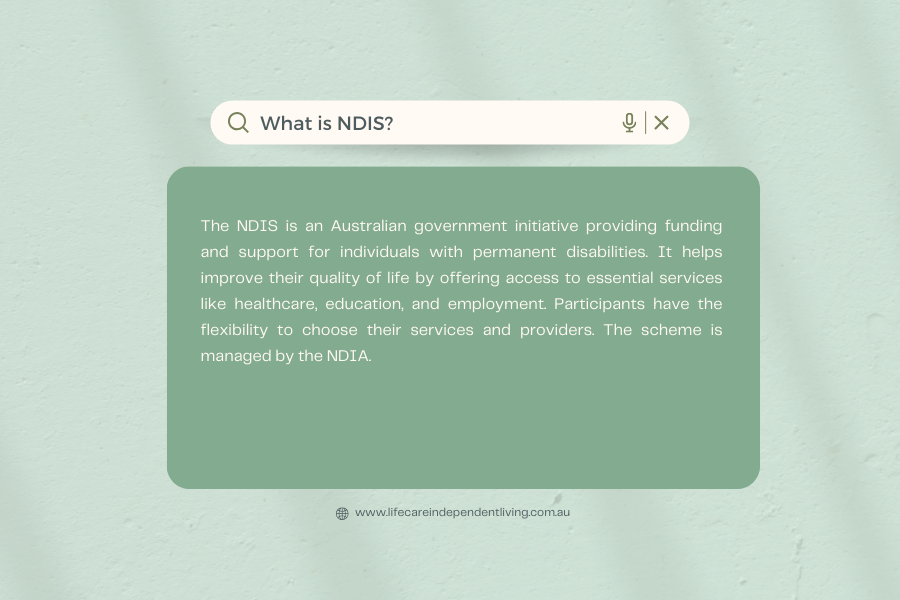
Simple Facts About National Disability Insurance Scheme (NDIS) No One Knows
1.Early Intervention Focus
In Melbourne, the National Disability Insurance Scheme provides funds for early intervention, which is granted after thorough assessments and considerations. This support is for individuals who are not fully disabled but suffer from some permanent impairment. The goal of early intervention is to prevent the individual from becoming fully disabled by improving their functional capacity.
A child under 7 with any permanent impairments listed under List D (e.g., chromosomal abnormalities, systemic atrophies, extrapyramidal and movement disorders, etc.) or any individual under 25 suffering from hearing impairment would qualify for early intervention. In Melbourne, individuals with psychological disabilities are also funded for early intervention.
2.Support for Carers
Families and carers play an extremely important role in supporting disabled individuals. However, they also deserve a break. That’s why the National Disability Insurance Scheme provides support for carers and families in Melbourne, with the primary support service being respite support.
Respite care, which is funded by the NDIS, provides external support to disabled individuals through out-of-home stays, extra personal support, or community participation. The NDIS allocates this funding based on the break needs of the carers. For more information, you can visit the Carers Australia website or ask the Local Area Coordinator.
3.Funding for Assistive Technology
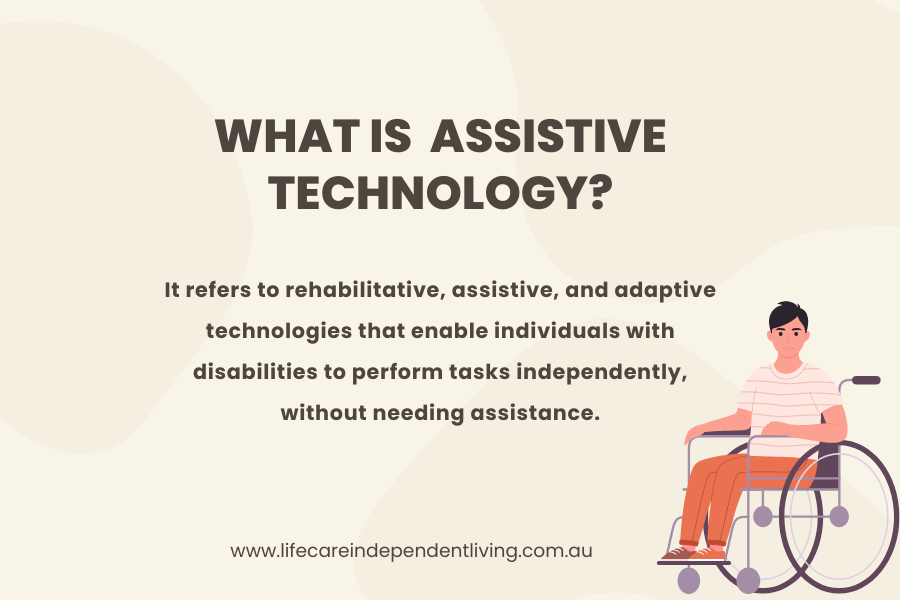
To put it simply, the NDIS first checks if the assistive technology is related to your disability and if it has the capacity to improve your situation before funding it. Secondly, they assess the safety of the technology and consider its price through a cost-benefit analysis. Lastly, they determine if you can receive funding for the same technology from elsewhere or not.
4.Support for Community Participation
As per the NDIA, social and community participation encompasses activities such as meeting people with similar interests, engaging in enjoyable activities, feeling connected and safe within the community, building interpersonal relationships, and exploring new interests. In Melbourne, the National Disability Insurance Scheme offers support for community participation through plan funding and by connecting individuals with disabilities to support networks and government agencies.
The NDIS in Melbourne provides community participation support to individuals with autism spectrum disorders, physical disabilities, and intellectual disabilities. For more information about this NDIS support, please visit https://ourguidelines.ndis.gov.au/home/community-connections.
5.Temporary Supports
According to the NDIS, temporary supports are provided to disabled individuals in two forms: short-term accommodation and respite care. In Melbourne, short-term accommodation, inclusive of respite care, involves out-of-home stay funding for a maximum period of 14 days. The NDIS provides funds for temporary support for a maximum of 28 days per year.
Respite care provides short-term services when the carer takes a break, while short-term accommodation provides these services when the disabled individual is being relocated to a new permanent home. These funds can be accessed through SIL (Supported Independent Living) facilitations. SIL funding also extends to short-term accommodations during home modifications.
6.Independent Assessments
The National Disability Insurance Scheme (NDIS) in Melbourne utilises independent assessments to evaluate NDIS participants. These assessments are carried out by specialised individuals selected by the National Disability Insurance Agency (NDIA) and are not part of your direct support network, friends, or family. The purpose of these assessments is to understand how your disability affects your life and to determine the most suitable NDIS services for you.
Standardized tools such as structured interviews and observations are employed to ensure the accuracy and impartiality of these assessments. Subsequently, these specialised individuals recommend necessary improvements to the participant’s existing NDIS plan.
7.Choice and Control
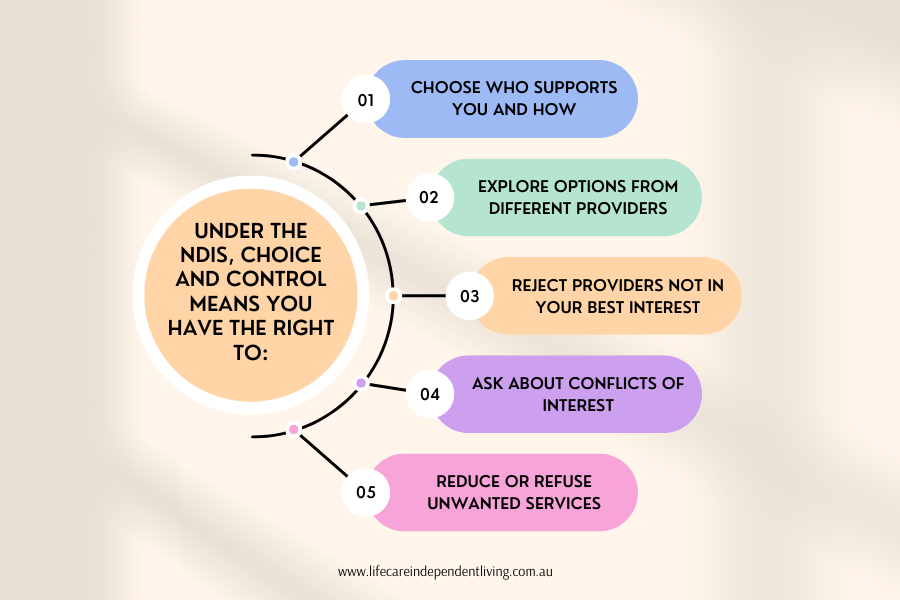
In Melbourne, the National Disability Insurance Scheme (NDIS) and the National Disability Insurance Agency (NDIA) provide disabled participants with choice and control. Choice and control under NDIS means you have the following rights:
- Decide who supports you and in what form or method this support comes in.
- Always approach different support needs from different providers.
- Do not accept a provider if you get a feeling that such a provider is not representing your interest.
- Ask a provider if he or she has any conflict of interest.
- Reduce or deny services or support you do not require or wish to receive.
- There should be a standard charge of reasonable and fair amounts for the support you are provided.
8.Support for Housing and Home Modifications
The National Disability Insurance Scheme provides additional funding for housing and home modifications in Melbourne. But what are home modifications? Home modifications are changes made to the home environment to improve mobility, independence, and accessibility. They can range from small adjustments like widening doorways to larger renovations such as converting a bathroom.
Minor home modifications cost less than $20,000 and are classified as either A (below $10,000) or B ($10,000 – $20,000). The classification depends on the Modified Monash Model (MMM). When modifications are more complex, a home modification assessor evaluates the home, and multiple alterations may be needed. Funding is available for planning, construction, and project management.
9.Support for Education and Training
In Melbourne, the National Disability Insurance Scheme provides support and funding for certain accommodations that enhance learning in higher education and training environments. These accommodations include assistive technology, specific curriculum adjustments, structural arrangements, and support services, among others. However, the NDIS does not provide funding for personal activities or general transport.
While the NDIS does not cover all types of support, it does offer funding for related services such as specialist disability services, support coordination, and skills development for employment and daily life. LifeCare Independent Living offers all these services, including support coordination and specialist disability services through Supported Independent Living (SIL) arrangements. Please contact us for more information.
10.Support for Employment
In Melbourne, the National Disability Insurance Scheme (NDIS) offers funding for employment support to assist participants in reaching their career goals. These supports go beyond what employers or Disability Employment Services (DES) can typically provide. As of July 1, 2020, employment supports have been moved from the Capacity Building budget to the Core budget. Participants can utilize these supports in a variety of workplaces, not just Australian Disability Enterprises (ADEs). To know about the pricing, refer to the various “pricing arrangement” catalogues.
Note: Refer to NDIS Pricing Arrangements and Price Limits 2024-25 and NDIS Support Catalogue 2024-25.
11.Support for Transport
Under the National Disability Insurance Scheme (NDIS), participants are eligible for transportation funding if they are unable to use public transport or face significant difficulties in doing so. The funding is provided through taxi subsidy schemes and does not cover transport assistance provided by carers.
In Melbourne, there are three levels of transport support under the NDIS. Level 1 provides up to $1,606 annually for individuals seeking improved transportation access. Level 2 offers up to $2,472 per year for individuals who are studying or working part-time, while Level 3 provides up to $3,456 annually for those studying or working full-time.
12.Support for Mental Health
The NDIS provides funding for psychosocial disability support, focusing on improving participants’ functional ability and participation in social, work, and community life. While the NDIS does not replace community mental health services, it works alongside them to provide comprehensive support.
In Melbourne, the National Disability Insurance Scheme collaborates with other government systems and community organisations to ensure a coordinated approach to supporting individuals with mental health conditions and psychosocial disability. This includes providing access to recovery coaches, support coordinators, and other local area coordinators.
13.Support for Indigenous Australians
There is a special branch of the NDIS that specifically provides services to Indigenous Australians. It is known as the “Aboriginal National Disability Insurance Scheme (NDIS)”. When combined with projects like Community Linkages, it provides direct support to Indigenous Australians suffering from chronic mental health conditions or disabilities caused by permanent impairment.
There are specific organisations that provide services to this group of people in Melbourne. For example, one such organisation is VACSAL. It empowers the “Victorian Aboriginal community to achieve social, political, and economic equity”.
14.Support for Specialist Disability Accommodation (SDA)
Specialist Disability Accommodation (SDA) refers to accessible housing designed for NDIS participants with extreme functional impairment or very high support needs. The NDIS provides funding for SDA, which is paid directly to providers. Participants contribute to rent and other living costs.
SDA providers must be registered with the NDIA, and their dwellings must be enrolled in the SDA program. The SDA Design Standard outlines design requirements, and the SDA pricing arrangements and price limits provide information on funding. The NDIA maintains a database of SDA vacancies and demand data to inform planning and allocation. To know more about SDA in Melbourne, either visit specialist disability accommodation or contact LifeCare Independent Living.
15.Support for Children's Therapies
The NDIS provides funding for a variety of children’s therapies, including speech pathology, occupational therapy, physiotherapy, psychology, and behavior analysis. These therapies aim to support children’s development, independence, and participation in daily activities, and are primarily for children with disabilities.
To access NDIS funding for children’s therapies in Melbourne, parents or guardians need to complete an application, undergo an assessment, and develop an NDIS plan. The specific therapies and funding allocated will depend on the child’s individual needs and the available resources.
Concluding Thoughts
The National Disability Insurance Scheme (NDIS) can be a valuable resource for individuals with disabilities in Melbourne, but navigating its complexities can be challenging. This blog post sheds light on lesser-known facts and provides practical insights to help you make the most of the NDIS. By understanding the nuances of the scheme, you can better advocate for your needs, optimize your support plan, and ultimately enhance your quality of life. Keep following LifeCare Independent Living for more such interesting blogs.